
SDA misses self-imposed deadline on orbital mesh network
“We are behind on that. We should be there already,” Space Development Agency Director G.P. Sandhoo said bluntly.
“We are behind on that. We should be there already,” Space Development Agency Director G.P. Sandhoo said bluntly.

LeoLabs also intends to deploy multiple Scout-S mobile phased array radars to fill gaps in its current network of 12 larger radar facilities around the globe.


One commander, many robots: Fully autonomous ground vehicles are reshaping the battlefield.

The SDN will provide the communications pathways for integrating and moving data from missile warning/tracking sensors to interceptors in near-real time under the Golden Dome construct.


Northrop Grumman is one of the only companies with expertise and capability to design, build and operate systems across an array of orbits.


To keep our homeland safe, we need a new approach to missile defense.

The proposed framework is based on adapting the risk-based approach the international air traffic control system uses to manage airspace to prevent planes from colliding, said Kevin Toner, vice president of MITRE's Center for Government Effectiveness and Modernization.

AI is reshaping the Army’s approach to cyber, electronic warfare and command and control. At TechNet Augusta 2026, leaders outlined how they’re turning emerging technology into capabilities for the battlefield.

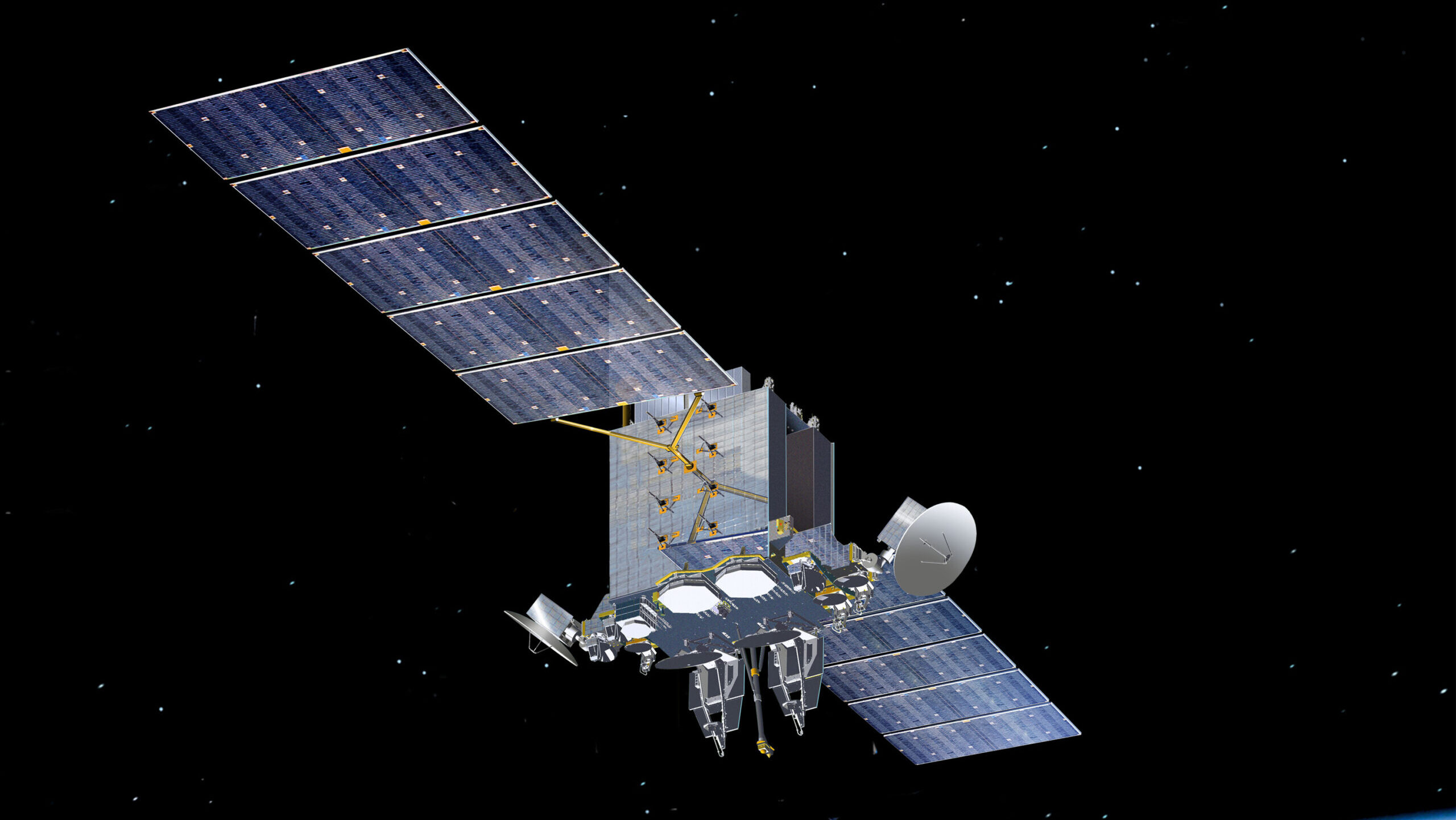
Tournear said that the optical intersatellite link demonstration was final success in a trifecta of baseline challenges to SDA's plan to network hundreds of military satellites in LEO, as well as to eventually to integrate commercial satellites into the mix.
The study notes that NC3 is one of the least understood of the many parts that make up the US nuclear weapons architecture, in part because of the high levels of secrecy that surround it. Thus, it is difficult for policymakers and service leaders to focus needed attention on it.

While GEOST has made infrared sensors for classified systems in the ones and twos, the new contract will involve building infrared sensors designed to be used in a larger constellation, LightRidge CEO Bill Gattle told Breaking Defense.


The O3b mPOWER medium-Earth orbit constellation enables nations to maintain control and autonomy over their space networks and safeguard national security, and to establish sovereign communications capabilities without relying solely on the government-proprietary satellite systems.

Explore how software, edge AI and resilient connectivity can strengthen military logistics in contested environments. Join Breaking Defense on Oct. 21 and earn 1 CPE credit.
"The key word here is persistence," study author Masao Dahlgren told Breaking Defense. "How do we get persistence over the regions we care about? That hasn't been as explicitly put into prior work until now. This report puts into sharp relief."

Numerous, redundant satellites in low Earth orbit will link the new Marine Littoral Regiments to joint commanders, allowing them to serve as the eyes and ears of the joint force in the Pacific, said Lt. Gen. Matthew Glavy.

Russian and Chinese anti-satellite tests are responsible for "pretty much 20 percent" of "conjunction" warnings, that is predictions that two space objects are likely to collide, in 2022, said the State Department's Eric Desautels.

A pair of studies, one from the Secure World Foundation and one from the Center for Strategic and International Studies, examine the state of play as nations search for ways to keep each other from dominating the heavens.